The future of work is no longer a distant sci-fi concept; it is unfolding right now on our screens. As artificial intelligence transitions from a novelty to a fundamental business tool, the global workforce is standing at a critical juncture.
At Zefta Media, we constantly monitor these digital shifts because understanding the trajectory of technology is the only way to stay competitive. The rise of AI isn't just about streamlining workflows; it’s about a fundamental restructuring of the global labor market. While the anxiety surrounding job displacement is valid, the narrative isn't just about loss—it is equally about evolution and unprecedented new opportunities.
Here is a deep dive into the jobs that are fading, the roles that will define the future, and the actionable steps you can take to thrive in the AI era.
1. The Fading Frontier: Jobs AI Will Fully Replace (and Why)
According to a report by Goldman Sachs, generative AI could expose the equivalent of 300 million full-time jobs to automation globally. The roles most at risk are those heavily reliant on routine cognitive tasks, data processing, and predictable outputs.
Data Entry and Basic Administrative Roles
Why: AI agents and intelligent automation can now extract, categorize, and synthesize data from unstructured documents instantly and with near-zero error rates. The need for human hands to simply move data from one spreadsheet to another is entirely obsolete.
Tier 1 Customer Service and Support
Why: Modern AI chatbots are no longer the clunky, rule-based systems of the 2010s. Powered by advanced Natural Language Processing (NLP), they can understand context, detect sentiment, and resolve complex customer queries in real-time, 24/7, across multiple languages.
Routine Copywriting and Content Spinning
Why: Large Language Models (LLMs) can generate product descriptions, basic SEO articles, and standard social media captions in seconds. While high-level, strategic, and emotionally resonant copywriting remains safe, the market for "filler" content creation is being entirely consumed by AI.
Basic Bookkeeping and Accounting
Why: AI systems can automatically ingest invoices, reconcile transactions, flag anomalies, and generate financial reports. As these systems become integrated into standard business software, the mechanical aspects of bookkeeping will require zero human intervention.
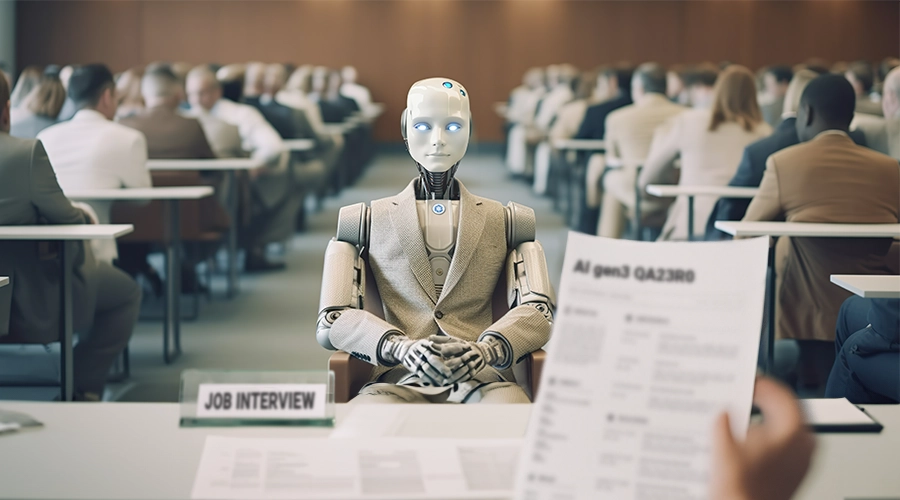
2. The Survival Guide: Solutions for Those Affected
If you find yourself in an industry vulnerable to automation, panic is not the solution—pivoting is. McKinsey & Company notes that AI will automate up to 30% of current hours worked by 2030, which means adapting is mandatory. Here is how to navigate the shift:
- Embrace AI as Your Co-Pilot, Not Your Rival: The quickest way to become obsolete is to refuse to use the tools replacing you. If you are a writer, use AI to outline and brainstorm, then apply your unique human voice. If you are in customer service, learn how to manage and train the AI chatbots your company deploys. The professional who knows how to leverage AI will always replace the professional who doesn't.
- Double Down on "Uniquely Human" Soft Skills: AI is terrible at empathy, complex emotional intelligence, cross-functional leadership, and nuanced negotiation. Shift your career focus toward roles that require relationship building, strategic decision-making, and conflict resolution.
- Pivot to Tech-Adjacent Roles: You don't need to become a hardcore programmer to survive. Look for bridging roles. For example, a displaced data entry clerk can upskill to become a Data Quality Assurance Lead, ensuring the data feeding the AI is accurate and unbiased.
- Adopt a Philosophy of Lifelong Learning: The days of learning one skill and riding it out to retirement are over. Utilize micro-credentials, online bootcamps, and modular learning to continuously update your skill set every 12 to 18 months.
3. The Horizon: Jobs That Will Emerge When AI is Strong
The World Economic Forum's Future of Jobs Report offers a highly optimistic counter-narrative: while AI may displace 92 million jobs, it is projected to create 170 million new roles, resulting in a massive net gain. When AI reaches its full potential, a completely new ecosystem of professions will emerge:
- AI Systems Integrators & Workflow Architects: Businesses won't just buy AI; they will need experts to weave it into their existing operations. These professionals will analyze a company's bottlenecks and design custom AI-agent workflows to solve them.
- AI Ethicists and Governance Specialists: As AI makes more critical decisions (from loan approvals to medical diagnoses), companies will need dedicated ethicists to ensure their algorithms are free from bias, comply with shifting global regulations, and align with human values.
- Human-Machine Teaming Managers: The future workplace will be a hybrid of human employees and AI agents. This management role will focus on optimizing the collaboration between human creativity and machine efficiency, ensuring seamless hand-offs between the two.
- Hyper-Personalized Experience Curators: As AI drops the cost of production to near zero, human-curated, bespoke experiences will become the ultimate luxury. Whether in travel, retail, or digital marketing, curators will use AI data to craft highly personalized, emotionally resonant experiences for elite clients.
Final Thoughts
The AI revolution is not a cliff we are falling off; it is a ladder we have to climb. The jobs of yesterday are fading so that the dynamic, highly-augmented roles of tomorrow can take their place. At Zefta Media, we believe that the key to thriving in this new era is agility. By understanding what AI can do better than us, we free ourselves up to focus on what humans do best: innovating, connecting, and strategizing.
The future belongs to those who are ready to adapt. Are you?
Sources & Further Reading
- • Goldman Sachs Research: How Will AI Affect the US Labor Market? (Globally exposing 300 million jobs to automation)
- • McKinsey & Company: A New Future of Work: The Race to Deploy AI and Raise Skills (Automating 30% of current work hours by 2030)
- • World Economic Forum: The AI-Driven Workforce (Projecting the creation of 170 million new roles against 92 million displaced)